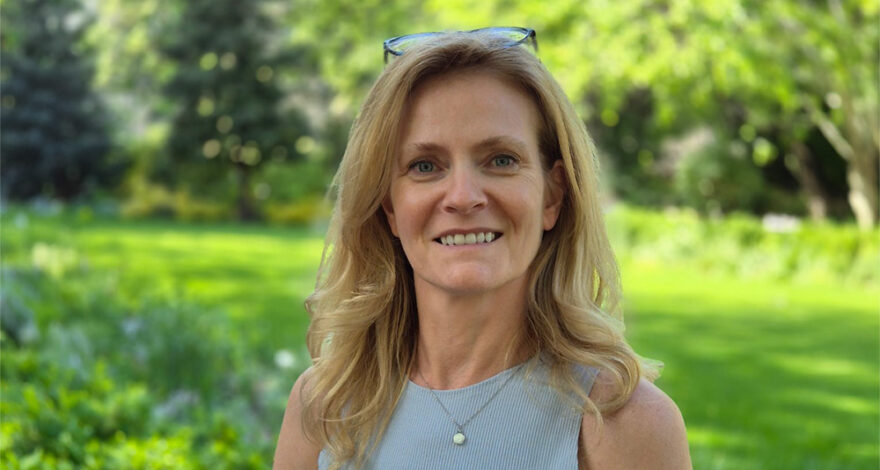
Réka Lenart, a leading professional in the international education industry and a key representative of ALTO, brings extensive experience to the field. Originally from Hungary, Réka brings decades of experience and insight to the global education landscape. With a strong background shaped by her diverse roles and a deep commitment to the sector, she has played an instrumental role in fostering collaboration and innovation across borders. While she recently mentioned she’s approaching her 51st birthday this May—with her signature humor—it’s her passion, leadership, and forward-thinking vision that truly define her journey.
You have been an educational travel agent in Budapest and also worked in a language school chain in London. How did you come to ALTO?
Yes, my first job straight after university was at Study Tours in Budapest, an educational travel agency where I gained firsthand experience in student recruitment and the intricacies of study abroad programmes. Some of the old timers in the industry will remember Peter Kovacs who was my first boss. I loved the industry, dealing with students and learning about destinations, and programmes to match their needs. When I moved to London to experience living abroad, I worked with David Anthonisz at Shane Global, a language school chain where I deepened my understanding of language education from an institutional standpoint and grew my network within the industry. I took some time off being a mum and living in Spain and returned at the exact right time to witness the first AGM of ALTO as an independent association in 2010. The first Board, David Anthonisz, David Brown, Santuza Bicalho and Andrew Mangion invited me to help them running the association and it was a natural fit for me since I knew most of the ALTO members personally. Being Association Manager allowed me to combine my experiences and contribute to the broader educational travel community by fostering collaboration among agencies, schools, and other key stakeholders within the industry.
ALTO is a very particular association because it includes agencies and schools. How many members are there in the association, and how many are agencies, schools, or other entities?
ALTO prides itself on being a unique forum that unites a diverse range of stakeholders in the international education industry, including educational travel agents, language schools, academic course providers, universities, national associations, and service providers. As of now, we have 122 member organisations. While the exact breakdown fluctuates due to ongoing membership changes, approximately half of our members are schools, 20-25% agents, we have quite a few members who are both agents & schools. The community is also strengthened by organisations that support international education, and a good number of associations, like Aseproce which brings an amazing variety of viewpoints to our discussions.
Is the Best Practice Guidelines the big milestone of the Association?
The introduction of the ALTO Best Practice Guidelines in November 2021 marked a significant milestone for the association. Developed after extensive data collection and industry consultation, these guidelines aim to establish a framework of integrity, honesty, and transparency for partnerships between educators and agents. By promoting mutually beneficial terms and fostering trust, the guidelines serve as a cornerstone for professional conduct within our industry.
We rolled out the guidelines to our member associations, so that their members can benefit from the framework.
Has the Mediation Panel been effective, and do the parties generally accept the resolution?
ALTO’s Mediation Panel was established to provide a neutral platform for resolving disputes between member organisations, particularly between agents and educators. While specific case details remain confidential, the panel was created to facilitate constructive dialogue between members who had previously agreed to follow the Best Practice Guidelines and aim to achieve amicable resolutions without entering into expensive court cases.
As agencies, we encounter more problems with accommodation than with the educational programme of the schools. How does ALTO face this recurrent problem, if possible, from Covid?
Accommodation challenges have indeed been a recurring concern, exacerbated by the disruptions caused by the COVID-19 pandemic. ALTO addresses these issues by facilitating open forums where members can share experiences and collaboratively develop solutions. Through our networking events and professional development sessions, we encourage best practices in accommodation management and promote partnerships with reputable housing providers. Additionally, our Best Practice Guidelines advocate for clear communication and transparency between all parties, aiming to mitigate accommodation-related issues proactively.
The Association actually had two foundations.
ALTO was originally established in 1998 during Fiyto in Miami to create a dedicated space for language travel companies and was later part of the wider WYSETC umbrella organisation. Members decide to create an independent ALTO in 2010 and the first Board drew up the impactful vision of a lean organisation providing those services to its members that were missing from our industry: professional development and a peer-to-peer platform for owners and decision-makers worldwide.
Besides the main goals, the Board also wanted the association to offer useful industry data to help leaders plan ahead, and to raise awareness about CSR—now more often called ESG and sustainability—through seminars and training.
We also felt that to keep the industry moving forward and make it more professional, we needed to support the next generation of leaders with proper development opportunities.
All this work aimed to boost the international standing of the language and educational travel industry in the global economy.
How far do you want to grow?
Our goal is to maintain the quality and diversity of the membership. Although we have space for growth, ALTO never planned to have more than 200 members within the association. We welcome members who are dedicated professionals, open to new ideas and are willing to share their experience, so that we can collectively address industry challenges and drive sustainable growth.
What are the big goals for the Annual Conference in New York?
The ALTO Conference New York is a brilliant chance to step back from the day-to-day, reflect on your business with fresh perspective, and build your leadership skills alongside fellow industry professionals in Manhattan. You’ll be in good company – with decision-makers from top educational agencies, language schools, academic course providers, service suppliers, and associations all coming together.
It’s not your typical B2B event – the focus is firmly on professional growth, sharing ideas, and meaningful networking within our leadership community. We bring in well-known authors and top business school lecturers to explore topics that are genuinely useful for running your organisation. During the interactive sessions you really notice the concentrated brainpower and experience packed into a small conference room. Participating in candid conversations aiming to tackle pain points and opportunities our leaders need to navigate is an unparallel experience that ALTO members have come to appreciate a lot.
Since 2011, we have gone through situations worldwide that we had never imagined, such as COVID, BREXIT, and war in Ukraine. Now the United States seems to want to isolate itself from the world. How do you think it will affect international mobility?
The international education sector has indeed faced unprecedented challenges in recent years. Policies that lead to isolationism can impact student mobility by introducing uncertainties around visas, work rights, and overall accessibility. However, education is inherently a global endeavour, and the demand for cross-cultural experiences remains robust. Institutions and agencies may need to diversify their markets and adapt their strategies to navigate these changes. ALTO remains committed to supporting our members through these complexities by providing timely information, facilitating dialogue, and advocating for policies that promote openness and exchange in international education.
In turbulent times like these, ALTO stays relevant and will become even more important, because leaders need a space to share their everyday challenges with peers going through the same issues and engage in conversations seeking to find solutions to their problems. The pandemic really brought this into focus, and in many ways, it brought genuine partners in the industry closer than ever.