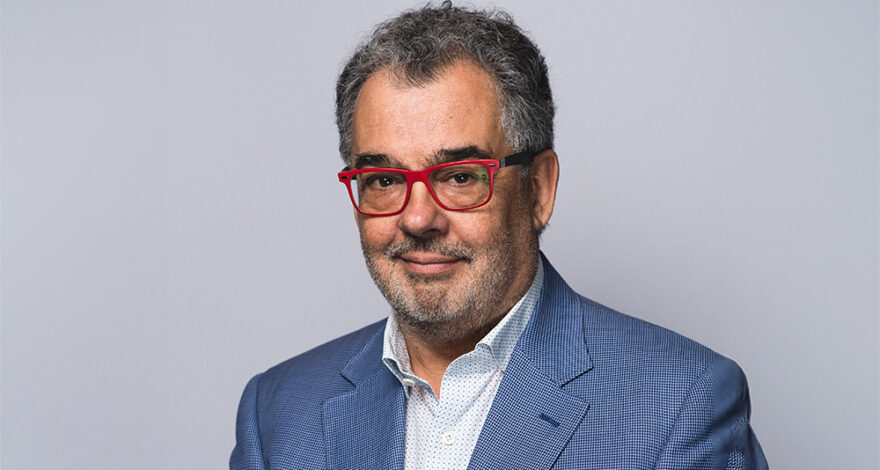
Juan Manuel Elizalde, from Santander, has been working in the international language travel sector for over 35 years, including 16 years as President of ASEPROCE—from the late 20th century until 2015. A pioneer in the profession, a tireless worker and a respected figure both in Spain and abroad.
You began your journey during the shift from the analogue to the digital era. For those who joined the sector more recently, what were the main differences in the way business was conducted then compared to now?
Many. At the beginning, for instance, accommodation details were sent by post or even dictated over the phone. Then came the telex and soon after the fax, which was a major breakthrough for our sector.
And, of course, the advent of the internet, emails, etc., and now AI.
Flying was also far less common and accessible, meaning there were fewer options available.
As a result, back then we had to work with much longer lead times and deal with far more complex processes.
When you became President, did you foresee such a long mandate?
No, not at all. With the Executive Board I led, we began to develop projects that required time, and situations arose that needed addressing. On top of that, my team was fantastic: very proactive and assertive when proposing alternatives, but extremely united and consistent once a decision had been made. That made things much easier for a President.
Are the struggles of 1999 similar to those of today?
Unfair competition and unqualified operators have been a constant throughout these years, both from the private and public sectors, often implying a lack of professionalism in many of these bodies.
Perhaps in the early days, it was more blatant, while today it’s more “sophisticated”.
At one point, you decided to radically change the course of the association, making the boldest and riskiest decision in its history.
The decision to pursue a path of quality, professionalism and legality—overseen and audited by an external auditor—was a tough one, extremely tough, I’d say. But it was necessary if we wanted to become the reference point for anyone looking to send their children abroad or travel themselves in a serious, professional, and trustworthy environment.
We wanted to convey to the public that going abroad to improve language skills was hugely beneficial, but it had to be done through professional, serious, and legally compliant companies.
Now that we know it all turned out well, everyone praises your bold move. But those were very challenging times.
Indeed, they were difficult times because many of the companies we had coexisted with for years had to make a decision, and they chose to leave. Some due to legal or technical complexities, and others simply because they didn’t believe in the new direction the Association was taking.
Is the ASEPROCE Quality Standard your greatest legacy?
Without a doubt, the ASEPROCE Standard is a major legacy and one I am very proud of.
But I believe my greatest legacy is achieving a sense of collaboration among companies—even those in competition. We came to understand that we share many of the same challenges and that working together we can find solutions and grow both collectively and individually.
You were President of FELCA and have remained actively involved ever since. Are the challenges similar to those faced by national associations?
Yes, interestingly enough, the issues faced by agencies around the world are very similar.
In some regions, visa matters are far more complex than here, but the rest—unqualified operators, unfair competition, etc.—are very much the same.
FELCA serves as a meeting point to share these issues and also as a platform to seek global solutions. During the pandemic, I believe FELCA effectively defended the interests of agents against unfair and arbitrary decisions some schools attempted to implement (advance payments, deposits, refunds, etc.).
We’ve lived through wars, pandemics, and economic crises… but now we face uncertainty driven largely by President Trump. Do we adapt too quickly to crises, or will this provoke a shift in preferred destinations?
Fortunately—or unfortunately—our society is highly adaptable.
Events unfold at lightning speed: today it’s Trump, tomorrow it will be someone else.
Some destinations, regardless of what happens, remain attractive and always will.
There are more filters, tighter borders, and new requirements—but people are keener than ever to travel. Where is our sector heading?
I believe our sector must move towards greater specialisation, both in terms of destinations and programmes.
Thirty years ago, language acquisition was the main goal, but now life experience seems to be taking precedence.
Absolutely. When the first Spanish students began travelling abroad, English wasn’t even taught in Spanish schools.
Later, English became a “must”. Then came the need for a second or third language. Today, while students have a much better command of English, what they are really looking for is maturity, independence, and ultimately to “open their minds”.
And that can only be achieved by travelling and facing new experiences.
Can AI replace the experience of living in another country?
I don’t think so. Every student is unique, and so is their personal experience.
Just as AI can’t replace aeroplanes (perhaps pilots), it can’t replace our emotions, our reactions, our lived experiences.
You’re also a respected art collector. Where will we be able to see your collection in the coming months?
Haha. Collecting is, for me, a passion—a source of enjoyment and knowledge, and, why not say it, an “escape” from our demanding work.
The next exhibition of our collection will likely be in Madrid, and I would be delighted to invite you all.