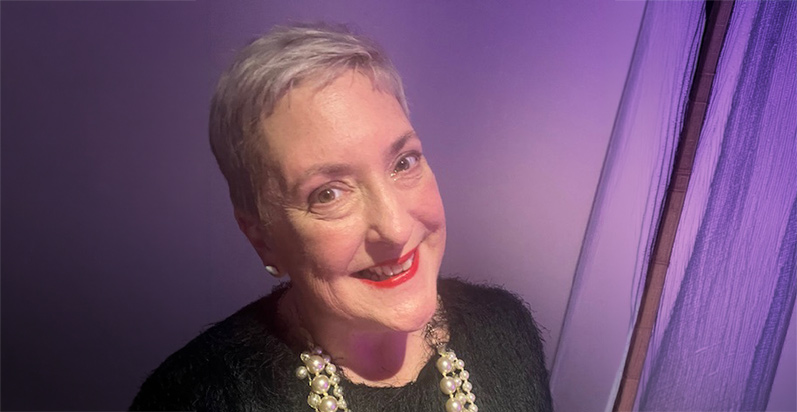
Nicola Lutz has become one of the most well-known figures in the industry. Intuitive and bold, her humanity goes far beyond her vast knowledge of school and agent marketing. Loyal to Study Travel, she has managed to balance what she calls her second family with a personal project of her own.
The British are not particularly known for their interest in foreign languages. Why did you decide to study Spanish and French?
I had a love of holidays and learning French at school got you on the best school trips!
My family were keen on camping when I was young, too, and I felt so proud when I could order from the menu, understand directions or play with the local kids. I loved communicating and have always been curious – so learning Spanish ab initio at uni too seemed a good plan.
You then spent a year at Pompeu Fabra University in Barcelona, followed by time in Metz (France). How did those experiences come about?
They were placements as part of my degree. I’d only learnt Spanish in class for a year before attending university in Barcelona – I struggled! So I set up ‘intercambios’ with people studying English to improve conversation and watched a lot of tv too (Lo Que Necesitas Es Amor was a favourite!).
What influence have Spain and its culture had on your life?
I love the directness of the Spanish people, it’s so refreshing. And linguistically – you can mess up words and as long as they can get the idea, it’s good! That ‘give it a go’ attitude – the celebration of simply trying – that’s stayed with me. And tapas – the best way to eat!
You entered our industry at a very young age through Study Travel. How did you first join the company?
It seems strange to think it was pre-internet! I saw a job advert in a printed newspaper – it was around 2cm square – tiny – and it said ‘can you speak Spanish? Do you want to travel? Can you sell? If so send your CV to Scott Wade.’
I 100% knew it was MY job and I picked up the phone and called Scott to tell him so. He politely asked for my CV first. Turns out, I was right, though!
Your role and responsibilities have evolved over time. How has that journey been for you?
I’ve been so blessed! How lucky to find this industry! And StudyTravel. Sales was always my area, and I grew into leading the sales team and was invited to become a Director around 16 years ago. I consider StudyTravel my family and the sector as my extended family. We have been through many things together and I’m still struck by the passion and love for language, culture and travel we share. It’s a special bunch of people.
The pandemic brought video calls and virtual meetings. Contrary to what many expected, we have returned to fairs and face-to-face contact. Why do you think that is?
It’s all about people, connection. We can use video, of course, and we all do. But real understanding and rapport comes from the nuances you can’t quite grasp over video. A pause, a sigh, a look, a tone. Using all our senses to experience a conversation is always going to be most effective for understanding.
And then No Fluff was born — straight to the point?
Yes!
A few schools had asked advice about converting their enquiries, so I helped. What was normal practice for me wasn’t for others and I was happy to help. From there I studied for some qualifications, learnt, volunteered with businesses in my spare time and practised what I knew in other companies. It was fun! I’d been to many sales events that were full of ‘fluff’, padding – not real how-to techniques, processes or actual methods and decided I would be direct and more useful – No Fluff, just practical ways to increase sales.
I had the chance to attend one of your talks, and the phrase that stood out to me the most was: “you need to contact a potential client seven times.” Does that apply to everyone everywhere?
No – if they’re never able to buy – or will never have a need – you should move them out of your pipeline.
But if they’re able to (‘qualified’) then yes! I wrote a best-selling book on exactly how to do this follow up without complicated technology and without feeling pushy. There is more to be made from existing enquiries, you just need a system.
You help both agencies and schools improve their sales strategy. Are there many differences between the two sides?
I’d say agencies are more commercially aware in terms of sales. They’re also aware that investment in the sales function will easily pay for itself. Their teams are there to sell. Schools still have an almost moral dilemma about selling education, like it’s wrong to mention ‘sales’ at all, and teams often do marketing, operations, even teaching too. But times are changing and I’m doing all I can to normalise sales in the education sector.
Beyond adding value to sales teams, do you also offer other types of consultancy?
No! No Fluff specialises in ‘selling education’. That may entail training teams, coaching leaders, designing workflows or strategy or facilitating communications to aid sales.
You started out in the prehistoric days of the internet, and now we are entering the era of AI. Is the essence still the same, or does the industry require deep reinvention every year?
We all need to move with the times! AI isn’t going anywhere so we must embrace it like we embraced the internet. I’d recommend allocating pockets of time to play around with it – or you’ll be too busy and catching up will feel difficult.
You have a son and a daughter in their early twenties. Have either of them followed in your footsteps in any way?
Both my children (23 and 21) have studied abroad of course, my daughter is in the care industry and my son Charlie, has worked in summer camps, a year in Australia in student services and now is in sales for a London provider and loving it!
Cycling is a huge passion for you and almost a way of life. Is the Whitstable seafront (Kent) your happy place?
Indeed – it’s a joy. I used to cycle long distances and be obsessed with time and mileage, but now I enjoy the journey more – cycling by the sea for miles is one of the ways I switch off. Having a coffee listening to waves is definitely my happy place.
________________________________________
Interview conducted by Pablo Martínez de Velasco Astray, President of ASEPROCE